Power Tool Battery Packs
Custom Li-Po packs for cordless tools where pouch format wins on weight, ergonomics or housing geometry.
The pouch slice of the cordless-tool market.
We ship custom Li-Po pouches and custom-shape packs into the slice of the power-tool market where pouch format wins: 6–12 V cordless screwdrivers, light drills, garden trimmers, hot-glue guns, soldering irons, kids'' DIY platforms and second-tier consumer brands chasing thinner / lighter form factors. We do not make 18650 / 21700 cylindrical packs for 18 V+ heavy-duty platforms — for those, a cylindrical supplier is the right path.
Thin, light, ergonomic — Li-Po pouch for handhelds.
When the tool grip is the bottleneck and every gram matters, our 2S / 3S Li-Po pouch packs (3.7 V, 7.4 V or 11.1 V at 1,500 to 5,000 mAh) deliver 30 to 50% better weight-to-energy than cylindrical alternatives in the under-15 V range. Standard chemistry: 4.20 V LCO with copper-tab welding for 2 to 5C discharge; heavy-duty variant with low-impedance anode for stall transients above 50 A.
We tune each pack to the motor current trace, not a generic datasheet — typical consumer drill with 25 A continuous + 60 A 200 ms stall, vs. prosumer drill with 40 A continuous + 80 A 500 ms stall — and ship the right tab thickness, BMS MOSFET grade and cell parallel count for each profile.

Smart packs with fuel-gauge IC for prosumer tools.
For tools with a screen or LED runtime indicator, we add a Texas Instruments BQ27Z561 or Maxim MAX17263 fuel-gauge IC on the BMS board. SMBus / I²C output gives the host MCU real-time state-of-charge, cycle count, temperature and a "tool-side learned" capacity model so the runtime estimate stays accurate across the pack's life.
Optional: NTC thermistor for charge-temperature inhibit, a second thermistor on the discharge MOSFET for thermal foldback, and a coulomb-counted "X minutes until cutoff" output for the tool's screen.
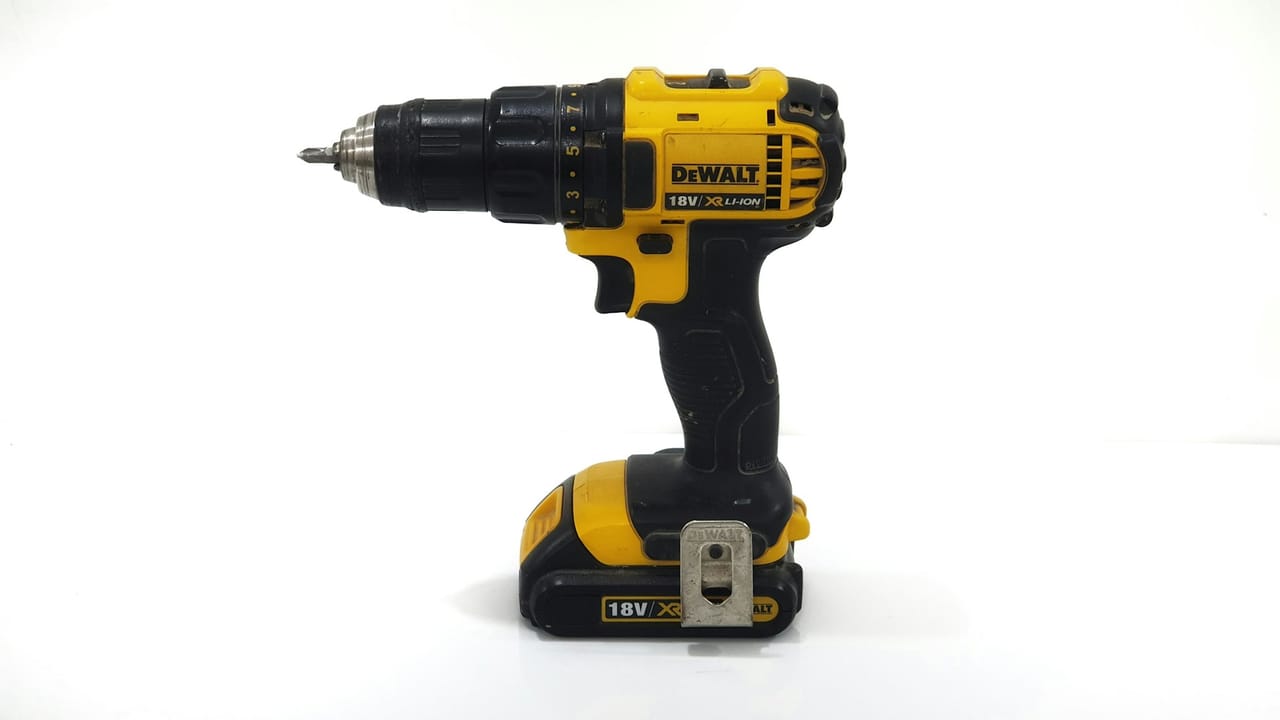
Real platforms, real specs.
| Tool | Pack topology | Capacity | Runtime / cycle target | Volume |
|---|---|---|---|---|
| 4 V Li-Po screwdriver (consumer) | 1S Li-Po pouch | 1,200 – 2,000 mAh | 40 – 80 screws / charge | 50k pcs/mo |
| 7.2 V cordless drill (DIY) | 2S Li-Po pouch | 1,500 – 2,500 mAh | 500 cycles, 50 – 120 screws | 30k pcs/mo |
| 10.8 V cordless drill (prosumer) | 3S Li-Po smart pack | 2,000 – 3,500 mAh | 500 – 800 cycles + SoC display | 20k pcs/mo |
| 12 V cordless trimmer / blower | 3S Li-Po smart pack | 3,000 – 5,000 mAh | 30 – 45 min / charge | 15k pcs/mo |
| Hot-glue gun, cordless | 2S Li-Po pouch | 2,000 – 3,500 mAh | 20 – 40 min heat / charge | 25k pcs/mo |
| Soldering iron, cordless | 2S Li-Po pouch | 1,500 – 2,500 mAh | 15 – 30 min @ 350 °C | 10k pcs/mo |
| Stylus / engraver (consumer DIY) | 1S Li-Po pouch | 500 – 1,200 mAh | 60 – 120 min / charge | 40k pcs/mo |
| Kids'' DIY drill / build kit | 1S Li-Po pouch | 800 – 1,500 mAh | UL 2054 + child-safe overmould | 30k pcs/mo |
Six rules that make a power-tool pack reliable.
A drill battery fails in two ways: voltage sag under stall current, or capacity collapse from heat. Six engineering decisions decide which one comes first.
Welded copper tabs
Ultrasonic-welded 0.2 mm copper tabs instead of solder, sized to the cell's continuous discharge current. Halves the connection resistance vs. tab-soldering and survives stall transients.
Tuned MOSFET sizing
Discharge MOSFETs sized to 1.5× the worst-case stall current, with on-resistance under 8 mΩ. Stops the BMS from being the bottleneck when the motor binds against a hard screw.
Dual NTC sensing
Cell-stack NTC for charge-temperature inhibit + MOSFET NTC for thermal foldback. The pack throttles before it ages, instead of after.
Real cycle target
Spec the cycle life against the actual duty profile — 1C charge / 2C average discharge / 5C peak — not the cell-vendor datasheet's lab curve. We'll either commit to the curve or up-spec the cell.
UN 38.3 + IEC 62133-2 + UL 2054
Pack-level transport and safety certs at every BOM trim. UL 2054 specifically required for the US power-tool channel.
Overmould vs. snap-fit housing
For consumer DIY: TPU overmould directly on the pack (no separate housing). For prosumer: snap-fit ABS housing with copper-strip bus and isolated cell stack. Both ship from the same line.
What power-tool OEMs ask before they commit.
Do you make 18650 / 21700 packs for 18 V+ heavy-duty tools?
No. We make polymer Li-Po pouch and rechargeable coin cells. For 18 V+ heavy-duty cordless platforms (impact drivers, circular saws, angle grinders), a cylindrical pack from a different supplier is the right path. We engage on the slice of the market where pouch format wins: 6 to 12 V cordless screwdrivers, light drills, garden trimmers, glue guns, soldering irons and consumer DIY.
What capacity for a 7.2 V cordless screwdriver?
1,500 to 2,500 mAh at 2S delivers 50 to 120 screws per charge. Consumer trim: 2C cells, $4 to $6 BOM. Prosumer trim: 5C cells with welded copper tabs, $7 to $10 BOM. Both with PCM and JST-PH / XT30 lead options.
Can a Li-Po pack handle stall inrush?
5C cells with welded tabs handle 50 to 80 A peaks for 200 to 500 ms (typical stall transient) without sag below the BMS cutoff. For higher stall envelopes, we go thicker tabs, larger MOSFETs or 2P parallel topology — send the motor current trace and we'll size the pack.
Cycle life expectations?
Standard: 500 cycles to 80% capacity. Heavy-duty: 800 cycles to 80%. LFP variant (3.2 V nominal): 2,000+ cycles for prosumer warranties.
What certifications come with the pack?
UN 38.3 (transport), IEC 62133-2 (cell safety), CE + EU Battery Regulation (Europe), UL 2054 (US power-tool channel), KC 62133 (Korea), BIS (India). USD 25 to 40k, 14 to 16 weeks for the full stack.
Engineering deep-dives.
Polymer Lithium Battery
Standard pouch chemistry, BMS topology, certification stack.
Explore the pillar →Custom-shaped Li-Po
Non-rectangular cells when the housing dictates geometry.
Explore the pillar →Sizing a Cell from a Power Profile
Convert a motor current-vs-time trace into a real capacity spec.
Read more →Building the next cordless tool?
Send the voltage, motor stall current, runtime target and target retail price — we'll come back with the Li-Po topology, BMS spec and BOM-trim that hits the runtime at your price.
Request Engineering Review