IoT Devices.
Long-life cells for sensors, trackers and edge devices.
An IoT node is only as reliable as its cell.
Half of IoT field failures trace back to battery behaviour at the edges — cold storage rooms, rooftop heat, decade-long buried asset tags, recharge protocols that age the cell faster than the firmware predicts. We build cells around the duty cycle and the operating temperature distribution, not the convenient 25 °C nameplate.
Our IoT customers ship two cell types from us: custom Li-Po pouches for any rechargeable device that fits a polymer geometry, and rechargeable coin cells (LIR / ML series) for the SMD-mounted RTC backup, BLE beacon and sensor maintenance modes. We do not make 18650 / 21700 cylindrical cells or Li-SOCl₂ cylindrical primaries — for ultra-long-life primary applications, your sourcing path is a different supplier.
Custom Li-Po pouch
50 mAh to 2,000 mAh in any rectangular, stepped or curved geometry. Sized to the enclosure, not constrained by standard SKUs.
Reflow-mountable coin (ML)
SMD ML2032 / ML2430 rechargeable cells. Survives J-STD-020 lead-free reflow profile. -40 to +85 °C operating.
5-year shelf life
≥ 85% capacity after 5 years at 20 °C / 40% SoC for medical-grade Li-Po, ≥ 90% for ML coin cells. Inventory rotation friendly.
Wide-temp variant
-30 to +70 °C Li-Po option for outdoor and cold-chain. ML coin cells -40 to +85 °C, 70 to 80% capacity at -40 °C.
500 to 1,500 cycle life
Standard Li-Po 500+ cycles at 80% DoD. ML coin 1,000+ cycles. LIR coin 500+ cycles. Cycle life qualified per lot before shipment.
UN 38.3 + IEC 62133-2
Cells ship with valid UN 38.3 test summary, IEC 62133-2 declaration of conformity, and MSDS. Audit support for medical and aerospace IoT.
Two architectures cover the IoT we ship into.
IoT cell selection mistakes usually come from picking the wrong format for the duty cycle and recharge cadence. The split below covers what we make.
Custom Li-Po pouch — for rechargeable IoT.
For any IoT device that recharges from solar, USB or a contact cradle: smart locks, video doorbells, cellular asset trackers, connected sensors, smart-agriculture nodes, contactless payment terminals (the rechargeable kind). Capacity 50 mAh to 2,000 mAh in custom geometry; 500+ cycles at 80% DoD; -30 to +70 °C wide-temp variant available.
Engineering deep-dive: sizing a Li-Po cell from a power profile and how to choose Li-Po capacity for IoT devices — both walked through with worked examples.
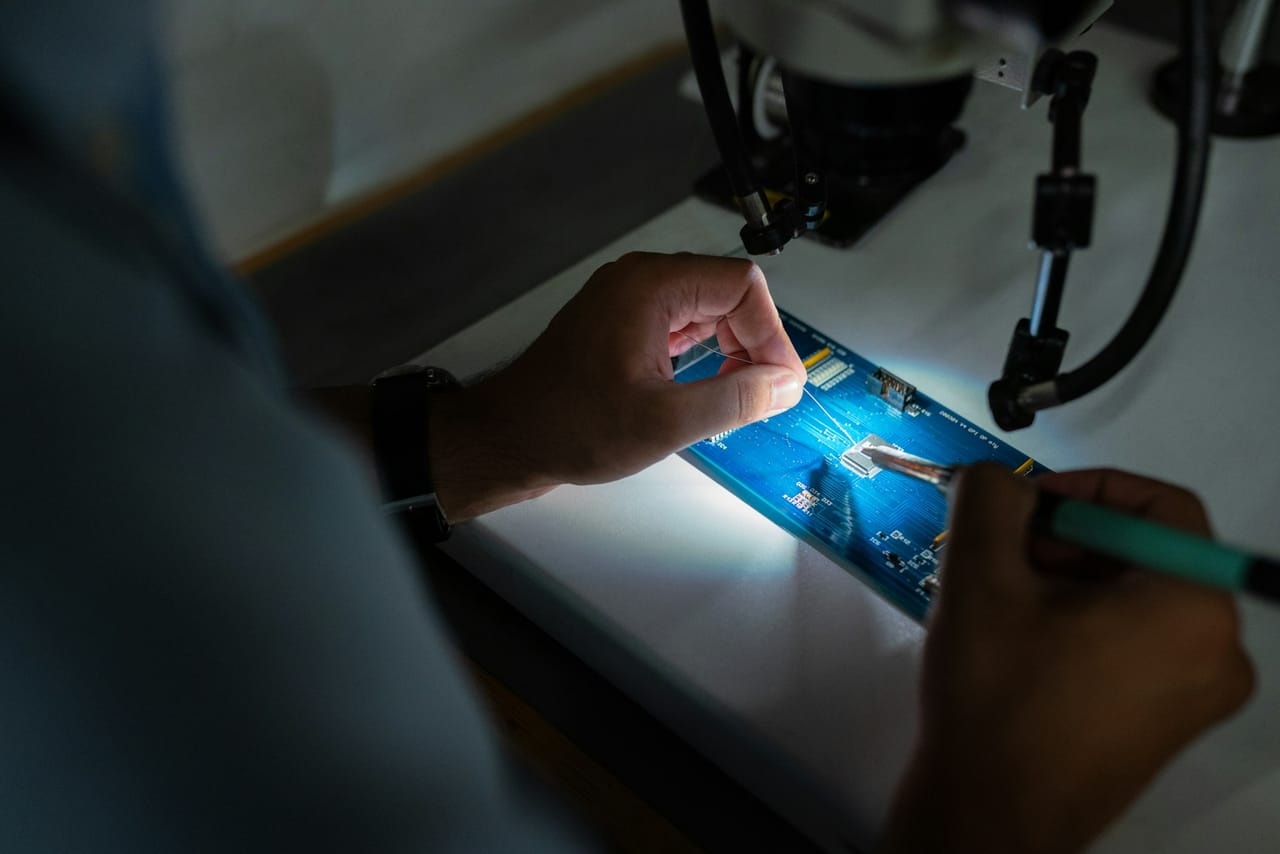
Rechargeable coin cell — for SMD RTC, beacon, low-event sensor.
For tiny embedded use cases: SMD-mounted RTC backup, BLE beacon, smart-card co-processor, sensor maintenance mode, smart-meter calibration retention. ML2032 and ML2430 cells survive standard lead-free reflow (260 °C peak) and run for 5+ years on a single charge. LIR2032 and LIR2450 are direct upgrades from CR2032 sockets when the device adds in-circuit recharging.
See LIR vs ML — choosing the right rechargeable coin cell and designing the reflow profile for an SMD ML cell.
What we've powered in the field.
| Application | Cell Format | Capacity | Notes |
|---|---|---|---|
| Cellular asset tracker (LTE-M / NB-IoT) | Li-Po pouch | 1,200 – 2,000 mAh | 3 yr active life with periodic recharge from solar |
| BLE / LoRa indoor sensor | Li-Po pouch | 200 – 600 mAh | 1 yr between charges, 500+ cycles |
| Smart door lock | Li-Po pouch | 1,500 – 2,500 mAh | 12 mo / charge, 500+ cycles |
| Video doorbell / camera | Li-Po pouch | 4,000 – 6,500 mAh | 3 mo / charge, 800+ cycles |
| SMD-mounted RTC backup | ML coin (reflow-compatible) | 40 – 65 mAh | 5+ yr passive, 1000+ cycles |
| BLE beacon (consumer) | ML2032 SMD | 65 mAh | 5 yr life, no battery replacement |
| Smart card / RFID writer | LIR2032 / LIR2450 | 40 – 120 mAh | 500 cycles, drop-in upgrade from CR2032 |
| Smart-meter calibration retention | ML coin | 40 – 100 mAh | 10 yr industrial RTC |
What IoT teams ask before they commit.
What Li-Po capacity do I need for a weekly-recharge IoT device?
Take the average current draw × 7 days × 1.25 (ageing margin). A 0.5 mA BLE smart lock draws ~84 mAh per week → 200 to 400 mAh pouch. For high-event cellular trackers reporting every 5 minutes, plan 1,200 to 2,000 mAh. See sizing a cell from a power profile.
When does a coin cell beat a Li-Po pouch?
Three cases. (1) SMD-mountable RTC backup — ML2032 reflows onto the board and runs 5+ years. (2) Very low duty cycle sensors (door/window contact reporting every few hours) — LIR2032 lasts 1 to 3 years between charges. (3) Sealed devices where pouch geometry doesn't fit but a 20 mm hermetic coin does. See LIR vs ML.
What's the temperature range for IoT cells?
Standard Li-Po: -20 to +60 °C discharge, 0 to +45 °C charge. Wide-temp Li-Po variant: -30 to +70 °C. Below -20 °C deployment, switch to ML coin cells (-40 to +85 °C, 70 to 80% capacity at -40 °C). Always inhibit charging below 0 °C to prevent lithium plating regardless of cell type.
How do I get 5-year storage shelf life?
Ship at 30 to 40% SoC (not full — full charge accelerates calendar ageing), store at 20 °C ± 5 °C, < 60% RH, and rotate inventory every 12 months. Medical-grade Li-Po holds ≥ 85% capacity after 5 years at these conditions; ML/LIR coin cells hold ≥ 90%.
Which certifications are needed for global IoT rollout?
UN 38.3 + IEC 62133-2:2017 + Amendment 1 globally. CE under the EU Battery Regulation, FCC at device level for the US, BIS for India, KC for Korea. Total stack: USD 25 to 40k, 14 to 16 weeks. See IEC 62133-2 complete walkthrough.
Engineering deep-dives.
Sizing a Cell From a Power Profile
From current trace to capacity spec — worked LoRa IoT example.
Read the deep-dive →Choose Li-Po Capacity for IoT
Practical 4-step guide for IoT hardware engineers.
Read more →LIR vs ML Coin Cells
Voltage, cycle life, reflow tolerance — picking the rechargeable coin.
Read more →Specifying an IoT node?
Tell us the duty cycle, recharge cadence and operating temperature — we'll size the Li-Po pouch or recommend the right coin cell, with a feasibility note in 24 hours.
Request a Battery Budget